A factory running at 100% capacity might look efficient, but it might also have nowhere left to grow.
Manufacturing has spent decades pursuing utilisation. Empty machine hours cost money, so the instinct is understandable: keep assets producing, minimise idle time and get as much output as possible from the available footprint.
But automotive demand doesn’t always behave neatly.
Programs ramp faster or slower than expected. Volumes shift. Priorities change. One line can suddenly have spare capacity while another becomes the bottleneck.
When everything is already committed, even a relatively small change can become difficult to absorb. That’s why flexibility deserves to sit alongside utilisation when we talk about efficiency.
It doesn’t mean accepting waste or leaving expensive equipment idle without reason. It means protecting enough room to respond when forecasts and reality stop matching.
That flexibility can come from adaptable cells, equipment that can support multiple programs, modular automation, smarter scheduling or the ability to balance production between sites.
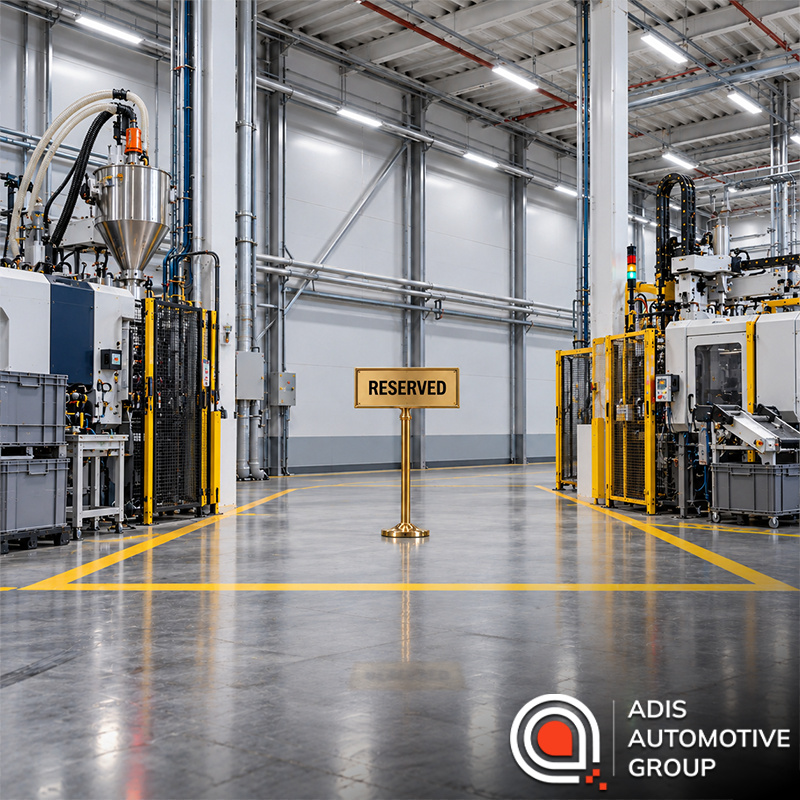
Sometimes, it can even mean deliberately keeping a little space in reserve.
The goal isn’t empty machines. It’s avoiding a production system so tightly optimised around today’s demand that it can’t adapt to tomorrow’s.
Efficiency still matters, but in an unpredictable market, room to grow has value too.